
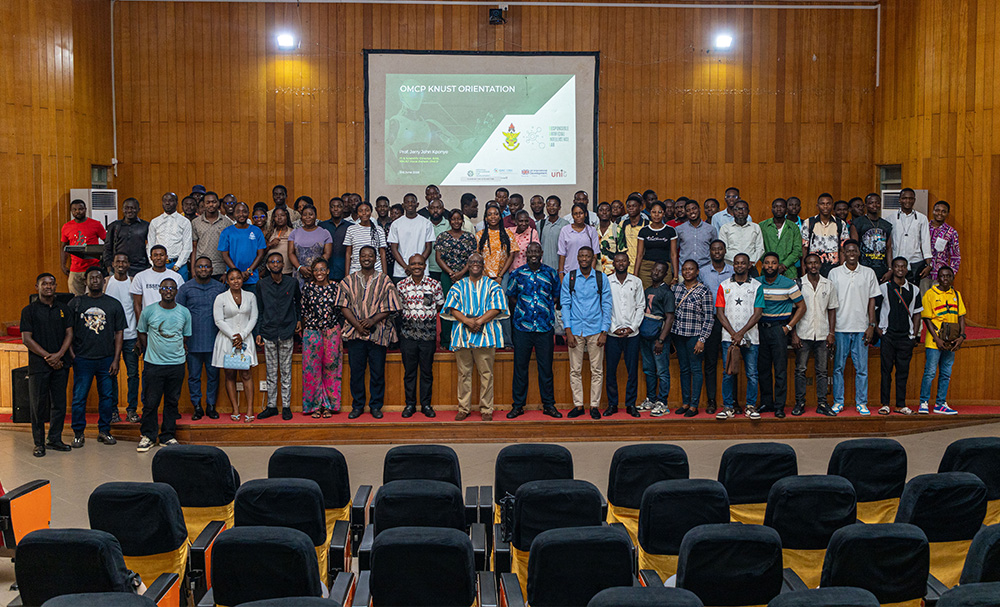
The Kwame Nkrumah University of Science and Technology, Kumasi (KNUST) has held an orientation for more than 1,000 students enrolled in the Government of Ghana's One Million Coders Programme (OMCP), a national digital skills initiative designed to equip one million Ghanaians with practical in-demand coding and digital technology skills to enhance employability, entrepreneurship, and participation in the digital economy.
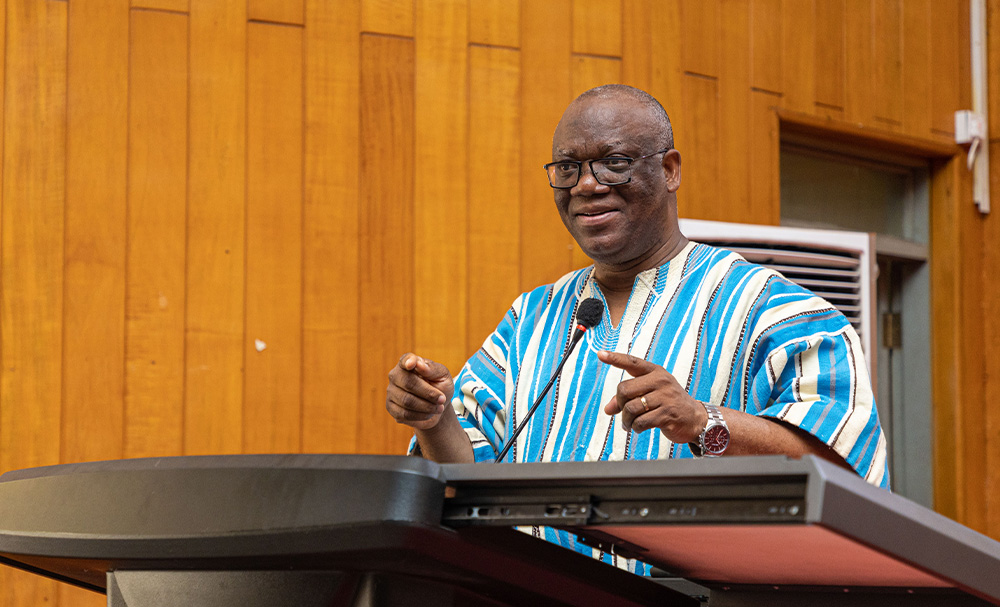
Addressing participants during the orientation, the KNUST Focal Lead and Principal Investigator of the Responsible Artificial Intelligence (RAIL) Lab, Professor Jerry John Kponyo, emphasised the importance of equipping young people with relevant digital skills to enable them to take advantage of emerging opportunities in the global digital economy.
He noted that Africa, the youngest continent globally, with a median age of 19 years, faces both opportunities and challenges, stressing that deliberate investment in skills development is critical to national and continental progress.
He further observed that although Africa accounts for a significant share of the world’s population, its contribution to the global digital economy remains relatively low.
“We have a unique opportunity as a continent. If we acquire the requisite skills and capacities to maximise our contribution to the workforce, we will have a population that is actively engaged in work. If we take advantage of this opportunity to skill our young people with digital skills, it means we will be able to serve the rest of the world for many years to come,” he stated.
Professor Kponyo cautioned that failure to equip young people with relevant digital skills could lead to frustration and social challenges.
"It is important that we use the opportunities available to build our capacities. When we acquire and develop these skills, globally we become valuable to organisations around the world that are looking for talent," he said.
Providing an overview of the programme, Professor Kponyo explained that KNUST is serving as one of the implementation hubs through four centres: the Department of Computer Science, the Faculty of Electrical and Computer Engineering, the Faculty of Mechanical and Chemical Engineering, and the Responsible Artificial Intelligence Lab.
A total of 1,048 students have enrolled across the four centres, with the Department of Computer Science recording 558 participants, followed by the Faculty of Electrical and Computer Engineering with 181, RAIL with 178, and the Faculty of Mechanical and Chemical Engineering with 131.
Professor Kponyo stressed that the programme places strong emphasis on discipline and accountability, noting that student progress will be closely monitored.
‘‘Participants who show little or no progress after two weeks will be engaged by centre coordinators, while continued inactivity may lead to removal from the programme to create space for other interested students, he said.
Beyond training and certification, Professor Kponyo said the programme's ultimate objective is to connect graduates to employment opportunities and emerging digital careers.
"Our ultimate goal is to see all who have completed their programmes connected to jobs. Complete your programme, earn your micro-credentials," he encouraged.
He urged participants to remain dedicated throughout the training and take full advantage of the initiative to prepare themselves for the future of work in the digital age.
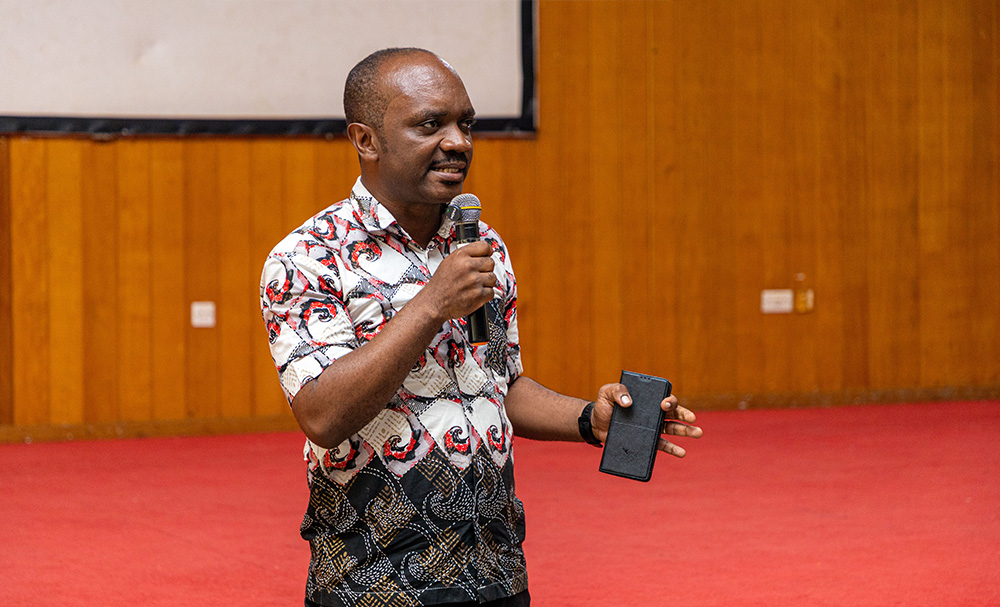
The Centre Heads, Professor Kwadwo Mensah Darkwa, Dr. Emmanuel Ahene and Mr. Kwadwo Marfo Nyantakyi also indicated that efforts are underway to support students who may not have access to computers, including arrangements to secure laptops for learning purposes. Students who already own laptops were encouraged to make use of available arrangements and study spaces to fully participate in the programme.
They further advised participants to develop structured study plans by calculating the required learning hours for their courses and allocating consistent time on a weekly and daily basis to ensure successful completion.


